
Made with heart & tradition. Matured by time
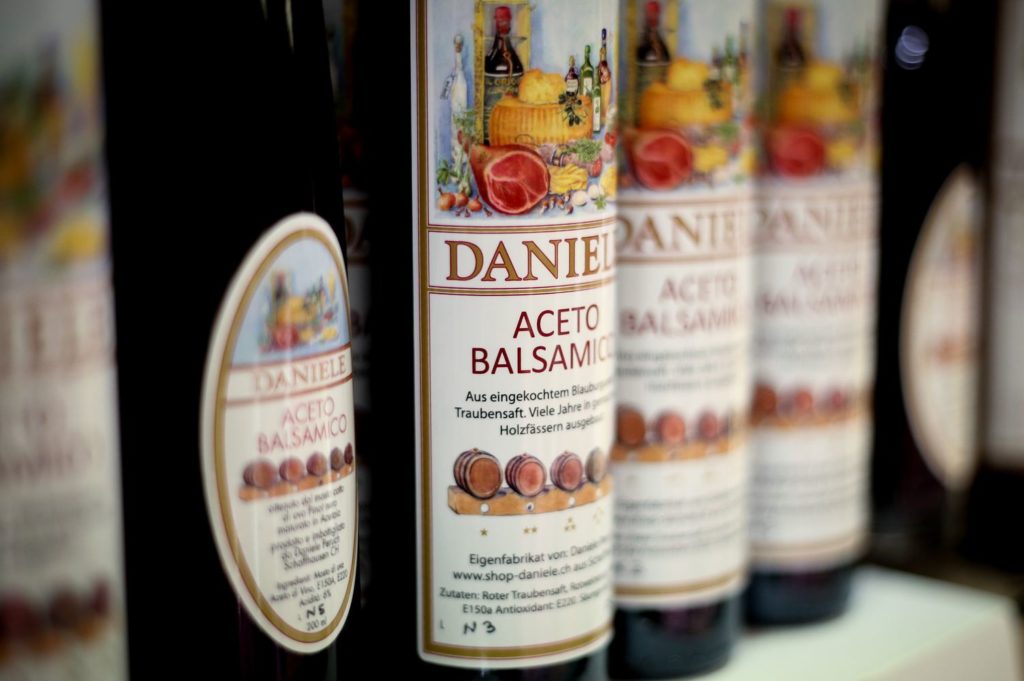
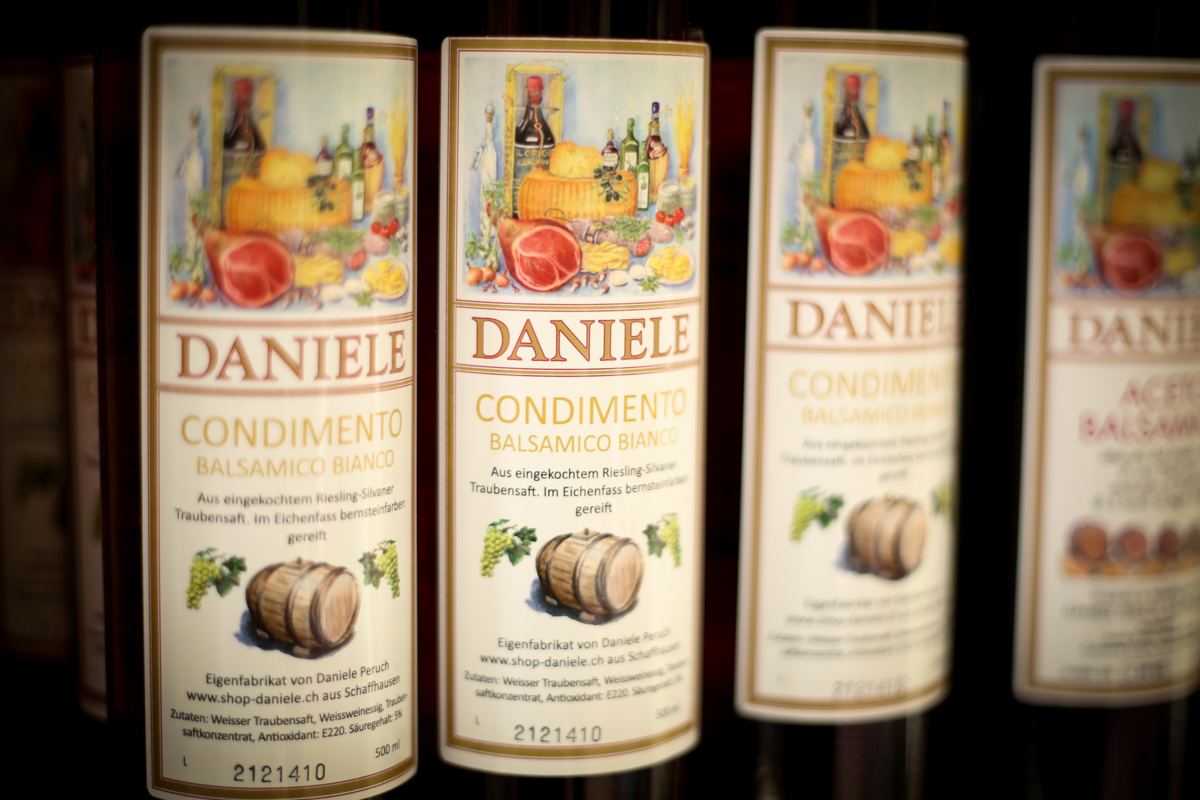
Aceto balsamico could be made anywhere where there are grapes. You just have to come up with the idea and have a lot of patience. Daniele Peruch from Schaffhausen had both 16 years ago - but above all, he discovered that the typical regional grape varieties were ideal for making aceto.
As soon as you enter Daniele's „Acetaia“ (or vinegar factory), you can smell the aroma of delicious balsamic vinegar. There are many barriques lined up along the walls - but also so-called „batteries“, racks with five or six smaller barrels of decreasing size. They play a central role in the maturing process and illustrate what balsamic production is actually all about: continuous concentration over years (or even decades) until a small but highly flavorful amount of the precious condiment remains at the end.
During its maturation, the aceto passes through all the barrels of a battery: the first and largest barrel contains the one-star balsamic vinegar, which still has a high proportion of young vinegar. After that, the contents become less concentrated and more syrupy from barrel to barrel. This is because water is lost during storage: In summer, liquid evaporates due to the heat; in winter, the cold causes the solid substances to settle to the bottom, which are later removed. „The older, the more concentrated, the more expensive“ is the rule of thumb. Legend has it that the traditional Aceto Balsamico from Modena, for example, has a barrel full of vinegar reserved for the newborn at each birth, which was given to him as a dowry at the wedding - which corresponds to a minimum storage period of 15 to 25 years ...
„The older, the more concentrated, the more expensive“ is the rule of thumb.
Aceto balsamico from Schaffhausen was born out of necessity: the overproduction of grapes by local winegrowers at the end of the 1990s gave Daniele Peruch the idea that aceto balsamico could also be made from them. He spent years experimenting and tinkering with the subject, as his Italian competitors did not want to reveal their trade secrets to him. Among other things, he discovered that the barrels made from different types of wood play a key role in the ageing process: The future balsamic vinegar „passes through“ barrels made of acacia, cherry, oak and chestnut wood, which have a significant influence on its aroma. The courage to invest in his idea and the patience to develop the products to optimum quality finally bore fruit: they found an enthusiastic audience - and earned him the national „Prix d'innovation agricole“.